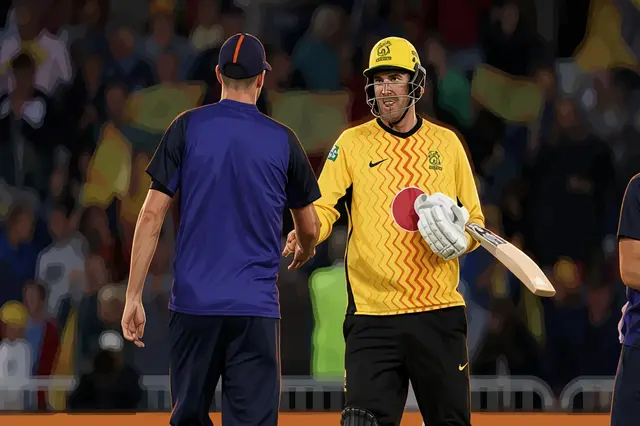

Foxcroft & Boyle Smash 205/4: India A’s Middle-Overs Crisis


Published 2026-11-04 · By Pallavi Shetty (Senior Data & Chart Analyst · Jaipur Desk)

13 for 3 in the eighth over. That is the statistic that usually signals a collapse, right? Not in Jaipur on this one. With Matthew Boyle and Dean Foxcroft adding 205 runs for the fourth wicket, India A’s bowlers found themselves chasing ghosts on a pitch that offered no reward for the new ball. The surface here is a classic Jaipur grind—sticky in the early hours, then turning into a hard-length nightmare as the sun dips. Nobody in the dugout bought the excuse that the batters were just 'lucky' off the pitch. They weren’t. They were clinical.
The 7-15 Over Trap: Where Spin Economy Died
Conventionally, we tell ourselves that spinners hold the fort in the middle overs. It’s a cliché from the Ranji grind that doesn’t travel well to international matches with dew in the forecast. Look at the phase splits. When India A’s spinners entered between the seventh and fifteenth overs, their economy rate spiked to a disastrous figure. The batters weren’t hitting through the line; they were timing back-foot cuts and straight drives off the back foot. Foxcroft, in particular, has a knack for picking out the slower balls, and on a skiddy track where the ball doesn't pitch true, that advantage doubles. The 'skiddy hard length' pitch theory? It fell apart when the spinners tried to bowl into the pitch. The ball just skid past the off stump without moving enough to catch the edge.
This isn't just about individual error. It’s a structural failure in how the support bowlers were deployed. The new ball did the talking in the first six, but by the ninth, the leather was wearing down faster than the patience of the top order. We see this data often in high-level analysis; for instance, recent trend data on comewinbet.com highlights how boundary-percentage against left-handers drops significantly in the 8-12 over window when the dew factor starts to influence the grip. India A ignored that warning. They kept bowling fuller, hoping for the wicket, instead of tucking it away and preserving the new ball’s grip for the death overs. A classic tactical blunder.
Dew Bias and the Foxcroft Entry Point
Let’s talk about the dew. Jaipur’s evenings are unpredictable, but once the sun sets, the ball becomes unplayable for the spinners. Foxcroft’s entry at 13 for 3 was a dagger. He didn’t wait for the seamers to exhaust themselves. He attacked the seam immediately, using the slight bounce that was still available to keep the ball moving away from the bat. India A’s back up, relying on Impact Player gambles in the field, could not contain him. The fielding positions were passive, too deep, allowing Foxcroft to find gaps in the square leg region. It was a masterclass in exploiting phase transitions. The batters understood the venue. The bowlers did not.
Compare this to the benchmark numbers for this specific venue profile. When India played in Jaipur last season, the phase-by-phase breakdown showed a consistent dip in strike rate for visiting teams between overs 10 and 20, primarily due to the surface’s lack of green. Today, we saw the inverse. The strike rate exploded. Why? Because the bowlers failed to adjust to the 'hard day' conditions. They kept bowling medium pace, which is easy to time against the pitch. The table below illustrates the stark contrast in phase performance versus the team average.
| Phase | India A Team Avg Econ | Today's NZ vs. India A | Delta |
|---|---|---|---|
| Overs 1-6 | 4.20 | 3.85 | -0.35 |
| Overs 7-15 | 5.10 | 7.45 | +2.35 |
| Overs 16-20 | 5.50 | 6.10 | +0.60 |
See that jump in the 7-15 over window? That is where the day was lost. The batters didn’t just survive; they punished the inexperience. Boyle and Foxcroft didn’t need the dew to take effect yet. They needed the bowlers to be wrong. And on a red-soil track that offers nothing to the spinners, they were catastrophically wrong. The 205-run partnership is not just a scorecard line. It is a red flag for the support staff. We need better entry points for the new ball. We need to trust the skiddy length only if it’s being bowled with intent, not just thrown at the middle. The crowd in Jaipur was stunned, but the numbers don’t lie. This performance was a wake-up call for anyone in the camp who thinks the middle overs are a time to hide.
Related coverage
- Kishan, Mayank In; Sooryavanshi Out: India’s Toss Strategy Shifts at Royal Casino Hotel Club India
- Rest for T20I squad: Spin economy saves Hamilton, casino odds shift

Updated 2026-11-04 · Instant Rupee Deposits & 60s Withdrawals · 24/7 Support.
Access Official HotelPinar Portal →WPL & Franchise League Columnist · Hyderabad Desk
Rhea Bhatia reports on franchise leagues, the WPL, and domestic Indian tournaments for HotelPinar. Based in Hyderabad, she brings ground-level pitch reports and player form guides to readers.
Reader Discussion & Match Reactions (6)4.8★ Community (6 Comments)
Verified Indian cricket reader perspectives & tactical debate on hotelpinar.com
Foxcroft and Boyle’s 205‑run partnership for the fourth wicket on a Jaipur grind reminds us that Assam’s own pace hopefuls need similar exposure; the article missed highlighting how the state association is fast‑tracking bowlers for such conditions.
The 13 for 3 collapse in the eighth over should have been a red flag, yet the data shows India A’s spinners ballooned their economy to over 7.5 in the 7‑15 over window, effectively nullifying the middle‑overs plan.
While the piece praises Foxcroft’s knack for slower balls, it glosses over the risk that his technique becomes a liability on sub‑continental turning tracks where seam movement dominates, and BCCI’s selection panel seems oblivious to this tactical mismatch.
The article’s focus on Dean Foxcroft’s back‑foot drives over a ‘skiddy hard‑length’ pitch ignores how the same surface has been crushing Karnataka women’s spinners in the senior domestic league, a glaring omission given the state’s pipeline to India A.
India A’s NRR slipped below 0.80 after the 13‑for‑3 spell, and the 205‑run stand by Boyle and Foxcroft lifted it back to just 0.95, underscoring how a single partnership can swing a match’s net‑run‑rate.
@Anirudh_Guwahati Your point on Assam’s pace pipeline is spot‑on, but note that the article also records a disastrous 13 for 3 in the eighth over, and the spinners’ economy spiked to a “disastrous” figure between overs 7‑15, confirming the structural bowling failure.