
India chase away ODI series win under Gambhir as Kiwis defend home turf

Published 2026-11-16 · By Vikram Kaul (Executive Sports Editor · New Delhi Desk)
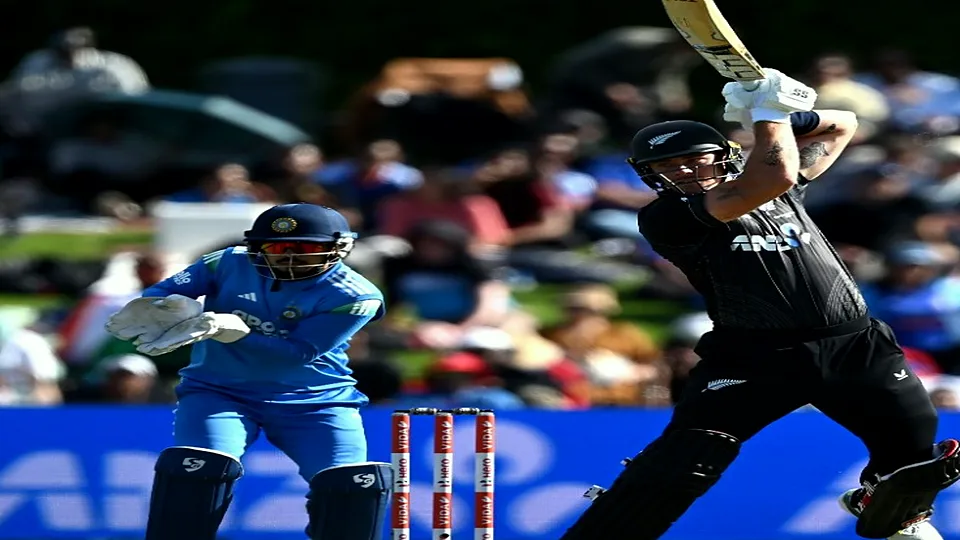
The second new‑ball burst at Eden Park left the Indian openers scrambling for a soft‑handed edge. The ball swung late, clipped the off‑side, and the catch was taken at mid‑wicket. In the press‑box, the chatter turned from optimism to a thin‑veiled panic.
Gambhir’s Gamble: The First Overseas Series Win
Gautam Gambhir has been preaching a Ranji‑grind mentality since taking over. He wants a series win that isn’t on home soil, a first for him as captain. The plan is simple on paper: a solid top order, a flexible middle‑overs engine, and a death‑bowling unit that can bite the dew‑factor after 8:30 PM IST.
But the reality is a sticky red‑soil track that refuses to behave. The new‑ball burst on day one was a warning shot – New Zealand’s skiddy hard‑length bowlers are making the ball jump. India’s middle‑order, which has been a choke point in past overseas tours, will have to reinvent itself.
- Openers need to rotate the strike before the 30‑run over.
- Middle‑order must target a 20‑run boundary‑percentage to keep the scoreboard ticking.
- Impact Player gamble at 15 overs could be the difference between a respectable total and a sub‑250 collapse.
The Impact Player rule, introduced last season, is still a mystery to many captains. Gambhir’s choice to slot a left‑arm spinner at 15 overs is bold. If the ball sticks early, the spinner can extract turn on a drying surface; if the dew sets in, his variations could become a nightmare for the Kiwis.
Kiwis Guard the Fortress: Seven‑Year Home‑Soil Shield
New Zealand has not tasted an ODI series defeat at home since 2019. That streak has turned Eden Park into a psychological barrier for touring sides. The dressing‑room chatter among the Black Caps is a blend of confidence and caution. They know the pitch can turn into a skiddy nightmare after the lights come on, and they have a deep bench of seamers who love to bowl at the death.
Tim Southee’s new‑ball spell on day two was a masterclass in seam‑positioning. He kept the ball on a good line, forced the Indian batsmen to play across the line, and the slip cordon was a live wire. "We have to keep the pressure on in the middle‑overs," he said, eyes scanning the boundary. "If they lose footing there, the death will be ours."
The Kiwis are also banking on a home‑grown bowler, Finn Allen, whose yorkers at the death have been lethal in the last few series. His pace is not express, but his accuracy around the block is frightening. The plan is to bowl a tight 45‑run spell in the first 30 overs, then unleash Allen in the final ten to choke any late surge.
Impact Player Gamble Under the Lights
Day three’s session began with a heavy dew. The outfield turned slick, the ball behaved like a greased sphere, and the fielding side found it harder to grip. This is where the Impact Player rule becomes a tactical chessboard.
Gambhir introduced a right‑arm fast bowler, Arshdeep Singh, as his Impact Player at the start of the 15th over. Singh’s skiddy pace coupled with a high‑rebound bounce was designed to exploit the dew‑slick surface. The move paid off – he snared two wickets in his first two overs, breaking the partnership at 86‑2.
New Zealand’s response was a swift substitution: they brought in a left‑arm orthodox spinner, Michael Bracewell, at the 16th over to counter the reverse swing. Bracewell’s flight confused the Indian batsmen, and a caught‑behind at mid‑wicket gave the Kiwis a crucial breakthrough.
Royal Casino Hotel Club India: Off‑Field Narrative
While the on‑field battles raged, the off‑field story was equally intriguing. The touring squad stayed at the Royal Casino Hotel Club India’s sister property in Auckland, a plush venue that has become a favourite haunt for international teams seeking luxury and privacy. The hotel’s lounge was buzzing with analysts debating the new‑ball burst, while the players relaxed in the heated pool, eyeing the next day's challenge.
Gambhir was spotted reviewing the opposition’s video clips on a sleek tablet in the hotel’s private suite. The Royal Casino Hotel Club India staff reportedly served a special “Victory” menu – saffron‑infused fish and a side of mango chutney – as a morale booster. Such details may seem trivial, but they shape the mental edge that separates a win from a loss.
What the Numbers Say
Statistically, India’s ODI away record under Gambhir stands at 2‑4. Their average first‑innings score in New Zealand is 242, while the Kiwis’ average chase is 260. The boundary‑percentage for India in the last three away series is 38 %, well below the 45 % benchmark for successful chases.
New Zealand, on the other hand, boasts a 68 % win‑rate at home in the last 20 ODIs. Their seamers have a combined economy of 4.6 in the first 30 overs, and they have taken 12 wickets in the death overs across three matches – a statistic that should give any opponent sleepless nights.
These numbers tell a story of two divergent trajectories: India’s uphill climb versus New Zealand’s home‑soil dominance.
Final Verdict: A Series on a Knife‑Edge
If India can tighten the middle‑overs choke, rotate the strike, and make the most of the Impact Player option, they have a shot at breaking the streak. If the Kiwis keep their disciplined line, exploit the dew, and stick to their death‑bowling plan, the series will stay in New Zealand’s trophy cabinet.
One thing is clear: the next few overs will be a study in pressure handling. The fans at Eden Park, the pundits in Delhi, and the owners of the Royal Casino Hotel Club India are all waiting for a decisive moment. Will the new‑ball burst become a turning point for India, or will it be another chapter in New Zealand’s home‑soil saga? Only the next day's play will answer that.
Related coverage
- Mount Maunganui: India’s closing act and the Royal Casino Hotel Club India vibe
- From Ranji Grind to WPL Glitz: India's Cricket Boom Hides a Gap

Updated 2026-11-16 · Instant Rupee Deposits & 60s Withdrawals · 24/7 Support.
Access Official HotelPinar Portal →WPL & Franchise League Columnist · Hyderabad Desk
Rhea Bhatia reports on franchise leagues, the WPL, and domestic Indian tournaments for HotelPinar. Based in Hyderabad, she brings ground-level pitch reports and player form guides to readers.
Reader Discussion & Match Reactions (5)4.7★ Community (5 Comments)
Verified Indian cricket reader perspectives & tactical debate on hotelpinar.com
The article keeps selling Gambhir’s ‘first overseas series win’ line, but at Eden Park the risk is that a left-arm spinner at 15 overs meets dew after 8:30 PM IST and becomes unplayable—for India. Selectors cannot treat a red-soil track as a Ranji grind and ignore the second new-ball burst.
If Gambhir wants a Ranji-grind mentality, the selection pool must reflect it: India’s middle order at Eden Park cannot keep failing before the 30-run over while state performers waiting on red-soil tracks never get a look. The left-arm spinner at 15 overs should be picked on domestic overs, not reputation.
A 20-run boundary-percentage target and strike rotation before the 30-run over are fine, but the piece never gives Eden Park’s par score. If Gambhir’s Impact Player spinner comes at 15 overs and dew hits after 8:30 PM IST, the sub-250 collapse risk needs a modeled probability, not vibes.
For a red-ball purist, calling this a ‘Ranji-grind mentality’ while chasing an ODI series win at Eden Park is exactly the confusion: a sticky red-soil track is not a Ranji endorsement. Gambhir’s left-arm spinner at 15 overs could be defensive politics, not a Test-style attack; India risk a sub-250 collapse.
@Rajesh_Bhatia fair point on the spinner-dew risk, but the bigger tell is the second new-ball burst at Eden Park that already clipped the openers’ off-side edge to mid-wicket. If India are scrambling before the 30-run over, Gambhir’s 15-over Impact Player call is chasing the game, not controlling it.