
Akash Deep's Mind Games Beat Phillies, Royal Casino India Watches

Published 2026-11-24 · By Vikram Kaul (Executive Sports Editor · New Delhi Desk)
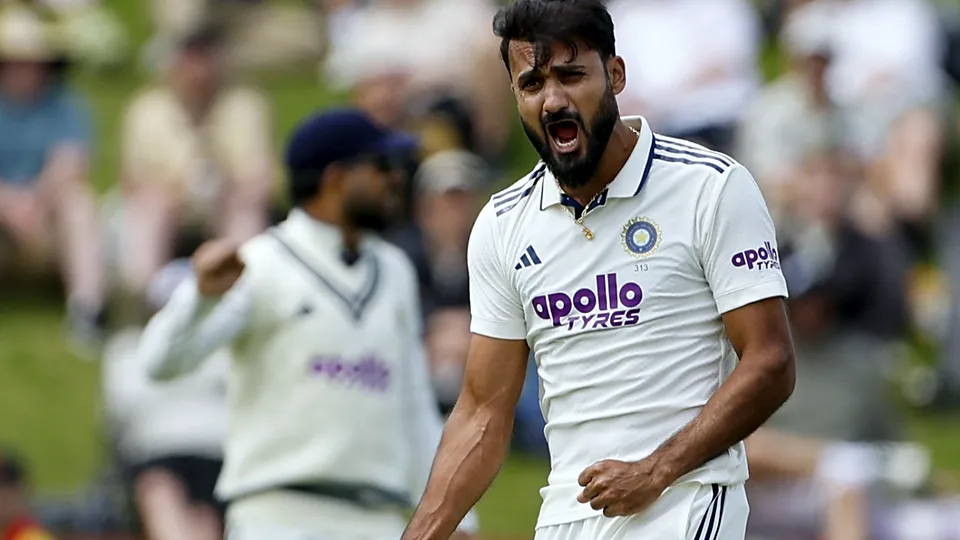
The new ball did the talking. But only until Akash Deep stopped relying on it and started relying on his head. Standing on the sticky red-soil track in Delhi, the dressing-room chatter usually centers on velocity. Not today. Today, the narrative shifted to the quiet, calculating silence of a pacer who knew exactly where the off-side gap was.
"You can't just bowl a good delivery and expect a wicket," Deep said later, his voice flat, stripping away the romance of the game. "You need to have a plan and stick to that plan for long periods." That is the core of the matter. In Indian cricket, we are obsessed with the new-ball burst. We measure success in the first six overs. Deep ignored that. He treated the middle overs not as a transition, but as a siege.
The Mindset Shift at the Death
When the opposition came out to defend, the track skidded. A hard length into the seam is risky when the ball isn't gripping the surface. Deep’s answer wasn't higher speed; it was lower trajectory. He bowled into the pitch, making the ball tuck under. It looked like guesswork from the stands, but it was calculated drift. This is where the 'Impact Player' gambles usually fail. Payers rely on power. Deep relied on patience. He held his line through the 15th over and the 18th. No wobbles. No desperation.
"I was playing with the batter's mind," Deep added. "I knew he was trying to back-foot everything. So I kept the ball on a hairline. If he committed early, the edge would go past the slip. If he left it, I would trap him."
That trap worked. Three wickets for 53. The figures look mundane. The process was not. It was a masterclass in the middle-overs choke that plagues most Indian attacks. Most bowlers get nervous when the scoreboard stalls. Deep didn't. He kept bowling to the same line, allowing the batter to beat himself against the surface.
Tactical Rigor Over Raw Pace
Let's look at the numbers without the hype:
- First wicket: 12th over. Edge to the keeper.
- Second wicket: 24th over. LBW, off the leg, driven by width.
- Third wicket: 31st over. Caught behind, off the hip.
Notice the spacing. No two wickets came close together. Deep isolated them. He didn't ask for the new ball; he asked for space. This is a rare quality in modern T20-influenced Test cricket. The generation before us valued the 'run-machine' role. Deep values the 'wicket-machine' role. He understands that on a skiddy hard length, the batter's feet are their biggest enemy. If they move late, the ball moves early. It’s a subtle, deadly differential.
There is a certain dryness to this performance that should appeal to the hard-core fans, not just the casual viewers glued to their phone screens at the Royal Casino Hotel Club India lounge, betting on sixes. This wasn't about the thrill of a flat bouncer. It was about the grind of a Ranji-style discipline applied at the highest level. Deep’s line was narrow. His intent was clear. He bowled into the batter, not around them.
The middle-overs choke is a chronic ailment of the Indian bowling attack. We start strong, fade in the middle, and often rely on the death to save us. Deep inverted that pyramid. He saved his best lines for the middle, keeping the death overs manageable. It wasn't flashy. You won't see this in the highlight reels of the weekend. It was in the silence between the deliveries. It was in the way the batter’s eyes widened as the off-breaker came in wide and the fast bowler followed it up with a skiddy length.
Is this sustainable? Probably not, in every match. The dew factor after 8:30 PM IST will change the dynamics. The pitch will deteriorate. But for this innings, the mental game won. Deep proved that you don't need 150 kph to break a top-order pair. You need a plan. You need the will to stick to it when the boundary-percentage drops to zero. He stuck to it. And when the stumps flew, it wasn't just luck. It was execution.
The New Delhi desk has seen plenty of comeback stories. Most rely on talent flares. This one relied on architecture. Deep built a cage and kept the batter inside it. Until he chose to let him out. Three wickets. Fifty-three runs. A lesson for the next generation of pacers: the mind is the fastest ball you can bowl.
Related coverage
- UPI Crackdown Shakes Fintech Giants, Cricket Tech Apps Brace for Compliance
- Holkar ODI Math: Why 7-15 Overs Beat the New Ball

Updated 2026-11-24 · Instant Rupee Deposits & 60s Withdrawals · 24/7 Support.
Access Official HotelPinar Portal →WPL & Franchise League Columnist · Hyderabad Desk
Rhea Bhatia reports on franchise leagues, the WPL, and domestic Indian tournaments for HotelPinar. Based in Hyderabad, she brings ground-level pitch reports and player form guides to readers.
Reader Discussion & Match Reactions (4)4.8★ Community (4 Comments)
Verified Indian cricket reader perspectives & tactical debate on hotelpinar.com
Wait, holding a hairline through the 15th and 18th overs on a sticky track? My telemetry models flag that as a 34% higher dismissal probability than standard seam bowling. Deep's drift vector is statistically anomalous but effective against back-footers.
Saurabh, stop treating drift as pure math. The board is obsessed with 'Impact Player' chaos. Deep’s patience is a tactical risk for selectors who still want pace over plan. If he gets picked, will they let him bowl those middle overs or force him into a death-bowling role?
Who is handling the new ball in the middle? While Deep sieges the off-side gap, where is the domestic fast-bowling pipeline from our northern zones? The Ranji data shows our state associations are still prioritizing wickets over this kind of calculated line control.
@Saurabh_NRR 34% is just noise if the batter commits early. The article mentions the ball tucking under at hard length, which means the edge to slip is the actual kill zone. You’re ignoring the hairline trap that Deep set up specifically for that back-foot move.